Showing posts with label city life. Show all posts

Sunday, May 23, 2021

"We used to joke about 'killing the car,' and we'd joke internally about how we were succeeding if people felt comfortable jaywalking."

Said Mark Edlen, the CEO of Portland-based Edlen & Co., formerly Gerding Edlen Development, quoted in "See you in 20 (or less): Living where access is within a short walk or bike ride/How cities aim to incorporate getting to and from common destinations in less than an hour" (WaPo). 

Edlen invented the term "20-minute living" — 20 minutes being how long it takes to walk across downtown Portland. 

If people felt safe jaywalking, the theory went, then cars were not dominating the built environment in a way that's inhospitable to other forms of transportation. So Edlen and his company set out to create places where people could get around within 20 minutes, be it by walking, bike, public transit or, as a last resort, by car. He eventually took his work to cities as far away as Boston.....

This is definitely what I'm looking for in a place to live. Of course, I'm interested in what one encounters on that 20-minute walk. What's that like in Portland these days? I want everything to be peaceful and aesthetically pleasing. Icing on the cake would be not feeling hated.

Wednesday, May 12, 2021

"I do miss the quiet, the strange peace, the empty streets, the feeling of solidarity among those of us who stayed, who don’t have country houses or parents or fancy friends with guest rooms."

"Perhaps this is because it reminds me of the East Village I moved into 40 years ago, when streets were deserted at night; when you could make out on your doorstep for an hour and not a soul would pass to catcall; when you knew your neighbors, knew the shopkeepers. We’re all in this together, that was the feeling. Despite the dirt, the rampant crime (one block west boasted one of the city’s highest murder rates, as drug gangs fought for turf), we were a community. Just by buying bread at the bakery around the corner (sturdy semolina, nothing fancy), I was invited to dinner at Phyllis’s, the counterwoman’s, house and later to her granddaughter’s wedding. The block was bustling with seemingly indestructible old women—Polish, Sicilian, Irish, Spanish—who would, before sunset, drag folding chairs to the sidewalk to watch another day dwindle.... This is how it felt during lockdown. Passers-by might be few, but those of us remaining, we were in it together. Fear of crime might be replaced by fear of contagion, but if fear doesn’t drive people apart, it can drive them together."

From "'Sometimes I Miss the Lockdown' On silence, solidarity and a feeling, a year later, of life on thin ice in the city" by Thomas McKean

Saturday, May 2, 2020

"Jenzeers."

I turned on the car radio and CNN was talking about "Jenzeers." Jenzeers, in the aftermath of the coronavirus lockdown, were going to decide whether to abandon New York City and leave it hurting for population and economic vigor.

Jenzeers... Jenzeers... who the hell are Jenzeers?
Gen Z-ers.

The story I was hearing on the satellite radio corresponds to this text news report at CNN.com: "Coronavirus is making some people rethink where they want to live":
After years of growth, New York City's population had started to slowly decline in 2017. Chicago and Los Angeles also saw their populations dip in recent years as the economy picked up in the suburbs and elsewhere. Other big cities have seen growth virtually stagnate.

"It's not just a New York thing," says William Frey, a demographer and senior fellow in the Metropolitan Policy Program at the Brookings Institution. "It's a kind of softening of growth among cities all over the country.... People have always come back to cities during some of the biggest disasters we've had in our history. ... When we look ahead in the next year or two, I'm not so concerned that we're going to see decline in city populations long-term"...

Immediately after the Great Recession, millennials flocked into cities and spurred a period of growth and revitalization. And in the aftermath of this unfolding economic crisis, Frey says Generation Z could take a similar tack.... "If they follow in the footsteps of millennials during a similarly dim period, they could help invigorate city growth -- especially if opportunities dry up elsewhere," Frey wrote in a recent analysis on the Brookings website....

Lifelong New Yorker Chloé Jo Davis never imagined leaving her beloved city -- until now. Davis and her husband were already used to working from home, but weeks spent cramped inside their rented two-bedroom apartment on Manhattan's Upper East Side -- homeschooling their three young sons and caring for four rescue pets -- have changed her calculation.... 
Four rescue pets... that got me. They had 5 human beings in a 2-bedroom apartment and they bring in 4 pets. That's got to be either dogs or cats, don't you think? There aren't rescue goldfish or rescue gerbils. We're talking about sizable mammals that have the run of the place and shed hair and vomit and let you know how they feel.

Anyway... city life. I've done it myself... done NYC for about 11 years of my life. I like it, but adding children — more than one — and throwing pets on top... that already makes it hard to breathe. And then you throw in a dangerous respiratory disease... At some point you've got to want out, and if the job you have is one you do from home — you and your mate.... You're so free to leave.

And yet people don't leave. I understand how some folks are about New York. Every place else seems too not New York to be acceptable. I lived in New York City because I married a person who came from New York and his preference for the place was so overwhelming compared to anything I in my head. I didn't want to go back to Delaware or New Jersey. My ideas were vague — drifting over the general landscape like a line in a Johnny Rivers song ("She wants to live in the Rockies/She says that's where we'll find peace...") — so of course, New York won.

Friday, March 20, 2020

"Red and Blue America Aren’t Experiencing the Same Pandemic/The disconnect is already shaping, even distorting, the nation’s response."

From the perspective of Ronald Brownstein in The Atlantic:
A flurry of new national polls released this week reveals that while anxiety about the disease is rising on both sides of the partisan divide, Democrats consistently express much more concern about it than Republicans do, and they are much more likely to say they have changed their personal behavior as a result. A similar gap separates people who live in large metropolitan centers, which have become the foundation of the Democratic electoral coalition, from those who live in the small towns and rural areas that are the modern bedrock of the GOP.....

If the virus never becomes pervasive beyond big cities, that could reinforce the sense among many Republican voters and office-holders that the threat has been overstated...

“There’s a long history of conservatives demonizing the cities as sources of disease to threaten the ‘pure heartland,’” says Geoffrey Kabaservice, the director of political studies at the libertarian Niskanen Center and the author of Rule and Ruin, a history of the modern Republican Party.....

“This is something we’ve gone through a while here among Republicans,” Kabaservice says. “The feeling increasingly is that experts and the media are all part of this elite class that is self-dealing and is looking down on less-educated and less-fortunate people, and [that] they can’t be trusted to tell the truth.” He adds, “That dynamic … has been reinforced” by the emergence of the “conservative media ecosystem,” which unstintingly presents “elites” as a threat to viewers....

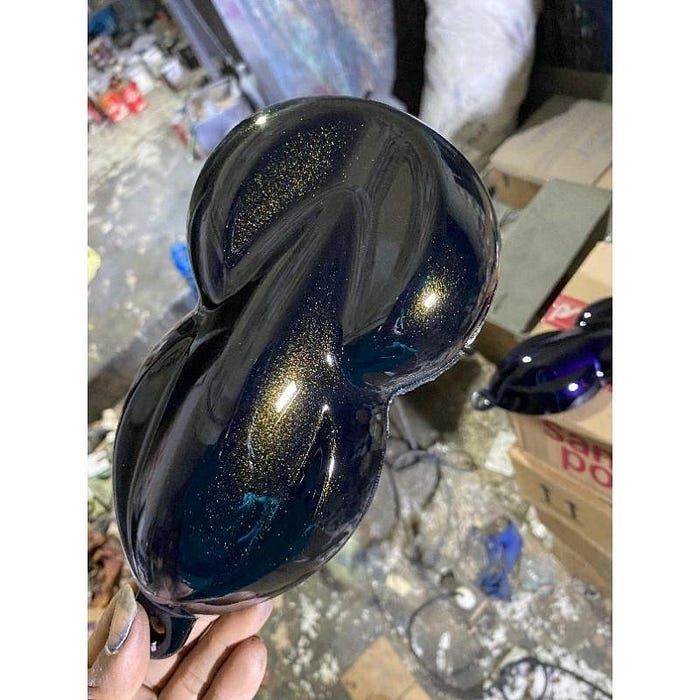
Cat Moonblack gold PU

  Cat Moonblack gold PU  adalah salah satu series yang mengandung partikel kecil seperti crystal yang dan memiliki effect lebih gelap sehing...