Showing posts with label solitude. Show all posts

Wednesday, May 19, 2021

"[W]hen 'Nothing Compares 2 U' made her a star, O’Connor said the song’s writer, Prince, terrorized her...."

"She writes that Prince summoned her to his macabre Hollywood mansion, chastised her for swearing in interviews, harangued his butler to serve her soup though she repeatedly refused it, and sweetly suggested a pillow fight, only to thump her with something hard he’d slipped into his pillowcase. When she escaped on foot in the middle of the night, she writes, he stalked her with his car, leapt out and chased her around the highway. Prince is the type of artist who is hailed as crazy-in-a-good-way, as in, 'You’ve got to be crazy to be a musician,' O’Connor said, 'but there’s a difference between being crazy and being a violent abuser of women.' Still, the fact that her best-known song was written by this person does not faze her at all. 'As far as I’m concerned,' she said, 'it’s my song.'... O’Connor converted to Islam several years ago and started going by the name Shuhada Sadaqat.... 'I haven’t been terribly successful at being a girlfriend or wife,' she said. 'I’m a bit of a handful, let’s face it.' But a few months ago, when she moved into her blissfully remote cottage, she found that several other single women lived alone nearby. Soon a couple of them had come by offering bread and scones, and she found herself with a crew of girlfriends for the first time since she was a teenager.... 'Down the mountain, as I call it, nobody can forget about Sinead O’Connor,' she said. But up in the village, nobody cares, 'which is beautiful for me,' she said. 'It’s lovely having friends.'

From "Sinead O’Connor Remembers Things Differently/The mainstream narrative is that a pop star ripped up a photo of the pope on 'Saturday Night Live' and derailed her life. What if the opposite were true?" by Amanda Hess (NYT).

Prince harangued his butler to serve her soup! He weaponized his pillow in their pillow fight! He stalked her in his car and chased her around the highway! And he — he and not she — got to be considered crazy in the good way. She was crazy in the bad way, it seemed, but she's owning her brand of "crazy." 

She said she considered herself a "punk" and when "Nothing Compares 2 U" became a big hit, things felt out of whack, and tearing up the photo of the Pope restored her idea of order to her life.

She wears a hijab now (over a head that's still shaved). And if you read the comments section over there, you'll see, she comes in and answers people:  

@Just I'm an older lady now... not supposed to be beautiful : ) 

@Tom Q The Q'ran exists to confirm all previous scripture. So one can keep one's Star of David rings and Christian tattoos

FYI I am wonderful : )

@Barbara am not tortured any more : ) 

IT IS NO MEASURE OF HEALTH TO BE WELL ADJUSTED TO A PROFOUNDLY SICK SOCIETY

Friday, May 7, 2021

"For a long time, Roth kept two small signs near his desk. One read, 'Stay Put,' the other, 'No Optional Striving.'"

"Optional striving appears to be a category that includes everything save writing, exercise, sleep, and solitude.... 'That act of passionate and minute memory is what binds your days together—days, weeks, months—and living with that is my greatest pleasure. I think for any novelist it has to be the greatest pleasure, that’s why you’re doing it—to make the daily connections. I do it by living a very austere life. I don’t experience it as being austere in any negative sense, but you have to be a bit like a soldier with a barracks life, or whatever you want to call it. That is to say, I rule everything else out of my life. I didn’t always, but I do now.... I have to tell you that I don’t believe in death, I don’t experience the time as limited. I know it is, but I don’t feel it.... I could live three hours or I could live thirty years, I don’t know. Time doesn’t prey upon my mind. It should, but it doesn’t. I don’t know yet what this will all add up to, and it no longer matters, because there’s no stopping.'"

From a 2000 article in The New Yorker, "Into the Clear/Philip Roth puts turbulence in its place." 

I'm reading that because the recent talk of the new — and out of print! — biography of Roth led me to read his novel "The Human Stain," which came out in 2000, so I was reading contemporaneous articles about that. 

I chose that quote for blogging because it's about heroic isolation and dedication to writing — writing and staying alive. Here's a passage that I found in "The Human Stain" that goes into the same subject:

Abnegation of society, abstention from distraction, a self-imposed separation from every last professional yearning and social delusion and cultural poison and alluring intimacy, a rigorous reclusion such as that practiced by religious devouts who immure themselves in caves or cells or isolated forest huts, is maintained on stuff more obdurate than I am made of. I had lasted alone just five years—five years of reading and writing a few miles up Madamaska Mountain in a pleasant two-room cabin situated between a small pond at the back of my place and, through the scrub across the dirt road, a ten-acre marsh where the migrating Canada geese take shelter each evening and a patient blue heron does its solitary angling all summer long. The secret to living in the rush of the world with a minimum of pain is to get as many people as possible to string along with your delusions; the trick to living alone up here, away from all agitating entanglements, allurements, and expectations, apart especially from one’s own intensity, is to organize the silence, to think of its mountaintop plenitude as capital, silence as wealth exponentially increasing. The encircling silence as your chosen source of advantage and your only intimate. The trick is to find sustenance in (Hawthorne again) “the communications of a solitary mind with itself.” The secret is to find sustenance in people like Hawthorne, in the wisdom of the brilliant deceased.

I put 2 things in boldface to connect them for the purpose of contemplating whether they are the same thing.

Tuesday, May 5, 2020

"And just two men, locked in a hut for six months of dark and cold, would probably kill each other, he concluded."

"So it would have to be one person alone. As the leader of the expedition, he felt obliged to assign himself to the job.... Once the sun set, on April 12, he would be stuck. No plane could fly in again until the sun returned in October.... Byrd at first took comfort in his routine of weather observations and in constantly rearranging his supply closets.... His cabin was buried in the snow, to present a low profile to the wind; the only way out was through a hatch in the roof.... On the page, Byrd’s voice cries out like the merciless Antarctic wind. He sits in his sleeping bag playing solitaire. He bangs around in the dark, fetching food and fuel from his storage tunnels.... He registers the ice crawling up the inside walls of his cabin, and the drifts of snow that cover him whenever he manages to lift the hatch to peer out at the weather and tend his instruments. Weakened by the carbon-monoxide fumes from his stove, he throws up most of his food. He stares at sleeping pills and wonders if he should take them. 'The dark side of man’s mind seems to be a sort of antenna tuned to catch gloomy thoughts from all directions,' he wrote of a particularly bitter day early in June. 'I found it so with mine.'"

From "Self-Isolated at the End of the World/Alone in the long Antarctic night, Adm. Richard E. Byrd endured the ultimate in social distancing" (NYT).

Saturday, March 21, 2020

"It was only natural for me to document my experience. I decided to map the four walls I was confined in and see where that took me creatively."

Said Gareth Fuller, quoted in "What happens when a map artist goes into quarantine" (CNN). Go to the link to see both his very elaborate artwork depicting cities and his cartoon-style mapping of his own little place. Both levels of art are good, and it resonates with me because it fits my favorite abstract category big and small.

Thursday, March 19, 2020

"More than two thousand episodes [of Desert Island Discs] are available online as downloads or podcasts..."

"... and I began listening to them a few years ago, as a way of glimpsing times other than my own. I love hearing about the path-altering memories of others—what it was like to experience Beatlemania or Motown or punk before they were settled narratives. At first, I was drawn to specific guests, hoping to learn more about the interiority of David Beckham (the Stone Roses, Elton John, Sidney Bechet), what kind of music Zadie Smith liked (Biggie, Prince, Madonna), where the cultural theorist Stuart Hall found inspiration (Bach, Billie Holiday, Bob Marley—'the sound that saved a lot of second-generation black West Indian kids from just, you know, falling through a hole in the ground').... It’s come to seem less like a show about music and creative inspiration than one about the possibility of loneliness. How do you find meaning in total isolation?... As many people prepare for weeks of 'social distancing' and working from home, we return to comforts.... It never occurred to me, until fairly recently, that this exercise was different from merely naming your favorite songs, or what you considered to be the best.... I didn’t realize that the desert-island choices were really a question about mortality.... What would it mean to survive and find yourself alone (Pharoah Sanders)? Would you bask in memories of friendship (the Beach Boys) and good times (Derrick May), of your greatest love (the Intruders)? Would those memories be too painful? Maybe you would want to listen to music that existed free of context—the last splendid and uplifting thing you heard before getting lost, a reminder that the world goes on without you?"

From "Join Me in My Obsession with 'Desert Island Discs'" by Hua Hsu (in The New Yorker). Go here for the shows.

ADDED: To be clear: "It’s an interview show with a simple premise: each celebrity guest discusses the eight recordings that he or she would bring if cast away alone on a desert island." Just 8 songs. Not albums.

Monday, March 16, 2020

"My wife got [a print of a boy on a horse asking, 'What is the bravest thing you’ve ever said?' to which the horse replies, 'Help'] for my birthday, and of all the things that we have..."

"... it’s the thing that I cherish quite a bit. It’s the only thing I pass when I leave my bedroom every day when I’m home. And it’s a reminder that strength is not necessarily being physically strong, but it’s asking for help, to be vulnerable, to be the person that I’m not supposed to be, right? And that’s not necessarily a bad thing."

Item #2 on a list of 10 "essential" things in "David Chang Loves Beethoven’s Ninth (but Won’t Finish ‘Infinite Jest’)/The chef, author and television personality, whose second season of 'Ugly Delicious' just arrived on Netflix, also puts a baby monitor, the Bhagavad Gita and 'Gattaca' on his list of essentials" (NYT).

I've been thinking, in this time of forced seclusion, about what it means to help. You can't be helping in person — unless you have a special medical or other relevant in-person service to provide. And most of us can help by just withdrawing and staying out of (literal) touch in the way that might, in normal times, seem churlish or cold. But beyond the negative help of not becoming part of the problem — not spreading the disease or becoming a consumer of medical resources — you can help. You can help by preserving and sharing whatever good thoughts you have that will make it easier for other people to accept and even to prosper within their seclusion.

I'm trying to do that, and I'm also going to push back when I see people who are not helping. I'm not shunning negativity altogether, but I'm trying to use a light touch. You can assume that when I say something like "Is Fox News helping?" (in the comments thread to yesterday's post about Trish Regan), I mean serious criticism of them for stirring up ridiculous unhelpful resistance to the needed social distancing. Ousting Trish Regan for her really stupid, flat-footed nonsense is the least they could do, and I suspect they only did it because it wasn't helpful to them. But I'd say the only reason Regan could be as stupid as she was is that it wasn't that far out of line with the general environment at Fox.

And that's not to say that the other cable news networks are helping. They seem to be trying to keep hating Trump, using any material he gives them, and every day, there's always something. I want them to make common cause with him and help. It's more important than their ratings and it's more important than who wins the next election. It's time to help.

But back to David Chang and the horse that bravely said "Help." Chang likes the idea of strength in terms of vulnerability — of seeing yourself as the one who needs help. I'm pondering how that balances with what I've been thinking about help: We need to be thinking how can I help. It's not inconsistent. Wondering how you can help is different from going about intending to help. What makes you think you're a fountain of help? Your "help" may have negative value. Seeing yourself as the one who needs help is better than imagining yourself as a giver of help when you are not helping.

First, help yourself. That's the #1 form that your helping can take. Next, quit "helping" with help that is not helpful! Use your time of forced seclusion to contemplate what it means to help others. Do you need some help with that?

Friday, March 13, 2020

"Mid-morning and still no new Althouse post. I'm beginning to feel isolated."

Said Sebastian at 8:52 a.m. in last night's café... which was just as I was finally getting around to working up a post — published, below, at 8:58.

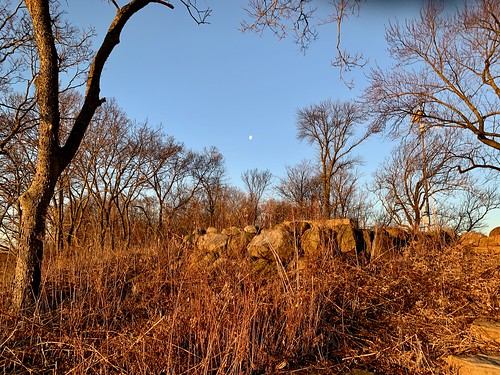
It wasn't just a matter of needing to get out to see the moon refuse to set...

B6FEBD0B-6E7E-485E-9FFD-C3F3616E116E_1_201_a

It was also the news itself. I was reading around in my usual manner and not finding anything suitable (not until that one thing you see below). There's a great deal about the coronavirus, but I'm not just doing news updates here, I don't repeat things I've already done, and there's the ineffable feeling of blogginess, without which I won't blog. Please consider the absence of posts in that light.

Sebastian's comment struck me, because it's either sad or funny. We are taking on isolation, and, in fact, one of the articles I read this morning and rejected as non-bloggable was something about how going on line and engaging with social media would not work in the context of isolation taken on in response to coronavirus. It felt concocted out of old material about how social media isn't a good enough substitute for in-the-flesh relationships. Just add coronavirus, and you've got another coronavirus article. I'm not a vector for that.

Anyway, good morning.

Thursday, March 12, 2020

"[W]hen Hurricane Irene devastated my state, Vermont, in 2011, people turned out within hours, bringing tools from backhoes to brooms."

"They mucked out basements and rebuilt driveways, and they kept coming back for weeks, until the job was done. They did it for strangers, mostly—although they didn’t remain strangers for long. But, with coronavirus, none of that is possible. There’s little way to be of use except to disappear inside your home, so that you can’t infect anyone. Indeed, even the places we gather for solace are increasingly off limits. Churches.... Schools....  sports...  We should use the quiet of these suddenly uncrowded days to think a little about how much we’ve allowed social isolation to grow in our society, even without illness as an excuse.... If we pay attention, we may value more fully the moment we’re released from our detention, and we may even make some changes in our lives as a result. It will be a relief, above all, when we’re allowed to get back to caring for one another, which is what socially evolved primates do best."

From "With the Coronavirus, Hell Is No Other People" by Bill McKibben (in The New Yorker).

There is the forced isolation of social distancing, and there is the isolation we choose for ourselves. During the forced isolation, we can reflect on the good and the bad of our chosen isolation. I don't agree with the implication that because we are "socially evolved primates," the meaning of life is to socialize. There is great value in solitude and in life within marriage and within a family. But this is a time to reflect on what really matters, and in addition to the trouble and pain, we may experience deeper benefits.

As we protect ourselves and others through this isolation, we should be thinking about how we can help. We can't help but going about ministering to others. And we need to help by doing what we can to avoid being among those who need medical care or cause anyone else to need medical care. Don't be part of the physical problem. But we can also help by using this time not to agonize and stir each other up but to preserve and refine our mind and our soul.

Wednesday, March 11, 2020

"The tricky thing is that social distancing works best when done preventatively, before things get really bad..."

"... says [Lori Uscher-Pines, a senior health-policy researcher at the RAND Corporation]. But there are downsides, too — canceled events mean lost money (and sometimes lost jobs), and self-isolation can be hard on one’s mental health. For that reason, says Uscher-Pines, many public-health officials find it challenging to decide when to instate social-distancing regulations.... 'If you are personally concerned about COVID-19, you should try to limit your contact and exposure to crowded places, and try to maintain a distance of three to six feet [from other people],' she says.... Err on the side of a liberal interpretation, when possible — for instance, if (and when) schools close, keep kids away from their classmates outside the school building too. 'A big concern with something like school closure is that school will be closed, but then kids will mix on their own outside of school, and that kind of defeats the purpose,' she adds."

From "What Does ‘Social Distancing’ Really Mean?" (New York Magazine).

ADDED: The term "social distancing" is not familiar enough for me to feel comfortable using it in explaining why I'm not doing something. When I wrote an email to cancel an appointment just now, I referred to what I'm doing as "taking a 'social distancing' approach," and I thought that sounded rude and changed it to "taking a 'self-isolating' approach." That's more I'm doing this to myself and less I'm doing this to you.

Monday, March 9, 2020

"The coronavirus is putting remote work to a gigantic test, and at a totally unprecedented scale."

"Throughout China, Italy, Japan and South Korea, workers have been on lockdown. Last week, the same happened in Seattle. Amazon, Facebook, Microsoft and Google all told employees there to remain home.... In fact, remote work isn't always possible. Fewer than half could do so at least some of the time, according to one Gallup survey. Hourly workers don't get paid if they don't work, and those in retail, manufacturing, or health care usually must be physically present to work.... 'I don't believe people are as productive at home'...."

From "Laundry Between Emails: Working From Home Goes Viral In The Time Of Coronavirus" (NPR).

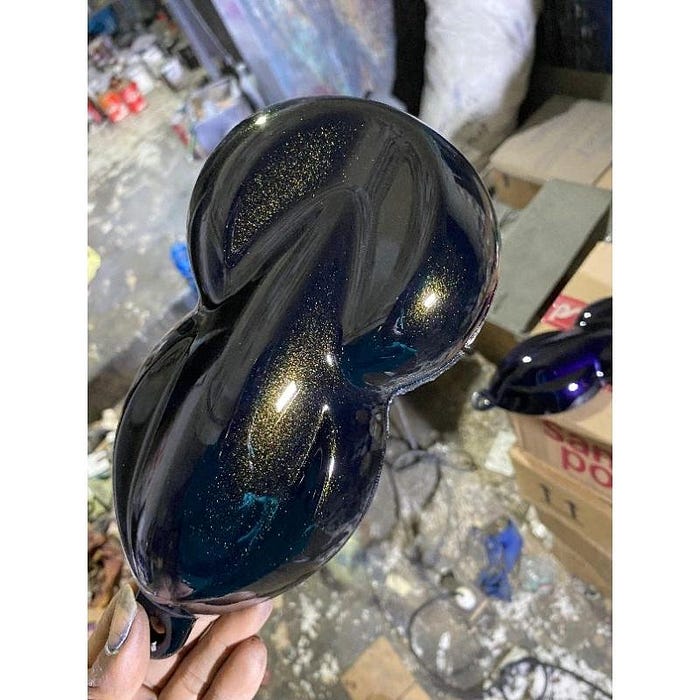
Cat Moonblack gold PU

  Cat Moonblack gold PU  adalah salah satu series yang mengandung partikel kecil seperti crystal yang dan memiliki effect lebih gelap sehing...