Tuesday, May 13, 2014

Oh, buoy!

Day #2. Will finish today. I love this fundraiser for Penobscot Bay Resource Center almost more than anything else I do!
If I were gonna make a habit of painting on buoys, I’d find some way to hold them steady. I painted on this one for five and a half hours yesterday, and it wasn’t my painting hand that was tired, it was the hand clutching the buoy.

I haven’t got a table per se in my studio, so I sat in the dinette in my kitchen to work on this. That had the advantage of being more comfortable, but it had the disadvantage of exposing me to my peanut gallery.

How can you tell the lobster is attacking New York? Because that's the Brooklyn Bridge!
“Do you really think a lobster could stand on his tail like that to attack the city of New York?” asked my son.

“A lobster could theoretically grow that big,” noted my daughter, who is a biomedical engineering major and presumably au courant on matters of biology. “Unlike humans, who have a finite number of cell replications, they can keep growing forever.”

Even my engineer husband and daughters haven't found a way to make working on this buoy comfortable. Any suggestions?
“However,” she added, “I think the lobster should be lighted from the bottom. He is, after all, in the City.”

I hate when my kids are right. But I also plan to finish this painting today, so they can have it in Stonington, ME, by May 15.


Let me know if you’re interested in painting with me in Maine in 2014 or Rochester at any time. My Belfast, ME, workshop is almost sold out. Click 
here for more information on my Maine workshops!

Monday, May 12, 2014

Barrier-free plein air painting

Schoen Place, even though it's a reworked old industrial space, is very accessible to the less-mobile painter.
As much as I loved teaching at the Irondequoit Inn and Lakewatch Manor, neither of them were barrier-free. I have a student here in Rochester who wanted dearly to come to Maine with me, but the staircases kept her away.  So when we booked into Belfast’s Fireside Inn, which has a lift, she signed up right away.

Ironically, my home studio in Rochester isn’t barrier-free, so V. only studies with me in the summer. When we first met I thought plein-air handicapped-access was probably not a workable concept. But in fact here in Rochester it works very well. We find a location, V. spins her walker around and uses it as a seat, and we’re good to go. We’ve painted at Lake Ontario, along the Erie Canal, at High Falls and at many other places.

Durand-Eastman is another place that's more accessible than it seems at first glance. It has a paved path along the waterfront.
It’s just a matter of avoiding places with really soft gravel, or places that require too much walking. Realistically, if it’s not safe and pleasant for V, it’s not going to be pleasant for someone schlepping 15 pounds of painting supplies on his or her back.

It’s not something I ever thought of before I met V, I’m ashamed to admit. But since I’ve been paying attention, I’ve realized that barrier-free is something smaller cities like Rochester have done better than other, trendier places in my orbit. We have the space to reinvent ourselves.

Highland Park is another place with excellent, paved paths, and it's possible to circumnavigate the space without using stairs.
I think it's going to work just fine in Maine, too. (I am almost sold out for this workshop, so if you’re on the fence about coming, you really should do something sooner or later.)


Let me know if you’re interested in painting with me in Belfast, Maine in August, 2014 or in Rochester at any time. Click 
here for more information on my Maine workshops!

Friday, May 9, 2014

The internet and art

The Romans kept their ancestor-geniuses in boxes. (Okay, they were actually shrines.) This one, from the House of the Vettii in Pompeii, shows two Lares (or guardian angels), flanking the household’s ancestor-genius.
When I went looking for Iván Ramos’ photos, it was very easy to come up with them, because he is practicing an open-source business model. When I went looking for Van Gogh paintings of an orchard on Tuesday, I had no problems, because Wikipaintings is open source.

Open source started off as a software development model, but has become more generalized. It means universal access through free licensing, and universal distribution, including subsequent iterations. For artists, it’s about sharing your process and it means not worrying too much about the low-res images of your work that are spinning around on the internet. (That’s not too difficult, since we sell paintings, not images of paintings.)

We keep our geniuses in different boxes: Wikipaintings, for one, which claimed to have 75,000 paintings on line as of June, 2012.
That’s pretty much the norm in my world of visual arts, where painters are happy to share process and images of their work. But it is not universal.

I would love to show my students how Andrew Wyeth set up his paintings. But the Wyeths are very protective of their intellectual property, so if you want to study them in breadth, you have to hie over to a museum that holds their work.

I would love to show you Jamie Wyeth’s Seven Deadly Sins, which uses seagulls as models. However, the Wyeths are very tight with their intellectual property, and so you’re unlikely to see the series on the internet. Here are some ravens in Maine instead, which aren’t out of copyright and which Wikipaintings displays under fair use principles.

What does this exposure do to the Cult of Genius that has elevated the artist since the 18th century? Hopefully, it destroys it forever, since the idea of the artist locked in his garret and thinking brilliant but ultimately solitary thoughts, is pretty terrible for the actual production of art.

Artists never worked in a vacuum.


Let me know if you’re interested in painting with me in Belfast, Maine in August, 2014 or in Rochester at any time. Click 
here for more information on my Maine workshops!

Thursday, May 8, 2014

More on this elusive business of success

Success to the artist means making time to make art. All the rest is just details.
Yesterday I wrote about three techniques for success. A reader asked, “Do you actually keep a planner with your schedule blocked out? Or have you just worked your way into a routine? It’s hard when everyone else’s schedules are so fluid.”

I worked my way into this schedule gradually, so it’s not written down. But I do understand about being answerable to other people’s schedules. It’s part of working from home, and part of being a parent. I just try to shake the interruptions off and get back to what I was doing as quickly as possible. After all, if I were in a corporate setting, I’d be interrupted all the time for meetings.

In part, it means persevering even when everything is going wrong.
It helps if you understand exactly what your goals are. People with dependent kids or parents are actually working two jobs at once. To pretend you can work eight hours a day at art when you have a toddler helping is unreasonable, but you should be able to work some time every day. Keep that chain unbroken.

The point of being self-employed is that you can set your own goals. For example, to scamper over rocks at my advanced age, I must keep fit. So I spend several hours a day exercising. For a younger person, that would be a ridiculous priority.

Success—for an artist—means organizing your life so you can make art. Everything else flows from there.

Let me know if you’re interested in painting with me in Belfast, Maine in August, 2014 or in Rochester at any time. Click here for more information on my Maine workshops!

Wednesday, May 7, 2014

Secrets of success over coffee

Photo by Iván Ramos
I had coffee with my pal Iván Ramos yesterday. He’s a part-time photographer and a full-time realtor, although the proportions are constantly shifting. I recently recommended he read Art & Fear: Observations On the Perils (and Rewards) of Artmaking, by David Bayles. He’d just finished it.

Photo by Iván Ramos
Bayles’ idea of what makes a successful artist can be boiled down to this: they keep making art. (However, don’t think you ‘get’ the book from that capsule description because every page is an ‘aha’ moment. It will be the best $7.32 you ever spend.) Launching from that, Iván and I started talking about our own organizational techniques.

Photo by Iván Ramos
Eat the Frog First—this means to start off by getting the most detestable part of the job out of the way first. Often these tasks have the greatest long-term influence on your career, but you really hate them.  If you have to eat a live frog, it doesn’t pay to sit and stare at it a long time—it distresses you and bores the frog.

For me, the “frog” is marketing and organization and part of the reason I dislike them is that they ‘distract me’ from my fundamental job. But that’s silly; they are an integral part of my fundamental job.

Photo by Iván Ramos
Time Blocking—this means doing the same thing at the same time every day, and it’s how I live my life. I approach every task—from laundry to painting—as a process that is allotted a certain amount of time, rather than as a job that must be finished. I learned long ago that this is the single best way for me to avoid “painter’s block,” because I don’t waste any time jollying myself into painting.

Photo by Iván Ramos
Don’t Break the Chain—this simply means that an artist has to work every day to be successful. Iván told me that in the early days of his career, Jerry Seinfeld put a big red X over every day that he sat down and wrote. The writer’s job, he said, was to not break the chain of Xs.


Let me know if you’re interested in painting with me in Belfast, Maine in August, 2014 or in Rochester at any time. Click 
here for more information on my Maine workshops!

Tuesday, May 6, 2014

It's apple blossom time

Orchard in Blossom, 1888, Vincent Van Gogh
This week, the fruit trees are starting to come into blossom. With my usual impeccable timing, I’m knee-deep in a project in my studio. Nevertheless, if Mother Nature cooperates, my class will be outdoors painting at G and S Orchards in Walworth this weekend.

Because I want my students to see how Vincent Van Gogh painted orchards in blossom, I went to Wikipaintingslooking for examples. I do this all the time, but this morning the process stopped me cold.

I’d estimate Wikipaintings has about 1900 paintings and drawings attributed to Van Gogh. Between November of 1881 and July of 1890, Vincent van Gogh painted almost 900 paintings. Wikipaintings, therefore, must have his complete oeuvre in one place.

Orchard with Blossoming Apricot Trees, 1888, Vincent Van Gogh
We can’t understand a painting in depth from the internet. However, it’s quite possible to understand a painter in breadth using a resource like Wikipaintings. And, very simply, nothing like this existed any time in the past. When I was young, we looked at paintings on slides or in books. (In comparison, internet images are very clear.) The rare and pricey catalogue raisonné, compiled by researchers, was as close as we could get to a broad view of a painter’s work.

Orchard and House with Orange Roof,  1888, Vincent Van Gogh. Wanna paint as well as Van Gogh? Draw, draw, draw…
We are beginning to see the development of online catalogue raisonné (see here for an example) but they’re almost redundant in the face of this free, open resource, Wikipaintings.


Let me know if you’re interested in painting with me in Belfast, Maine in August, 2014 or in Rochester at any time. Click 
here for more information on my Maine workshops!

Monday, May 5, 2014

Back to Castine in July

Castine from Fort George, 1856, by Fitz Henry Lane, The town is a little more populous today.

We interrupt the feverish painting of a lobster buoy to announce that I will again be painting in the 2014 Castine Plein Air Festival from July 24 to July 26.

Castine is a beautiful old town off the beaten path in Hancock County, Me. It is home to the Maine Maritime Academy. Like my home turf in New York, it has been under Native American, French, English, Dutch, and American dominion. But it’s a rare gem in that all those levels of occupation are clear to the casual visitor. They have great museums and their historical society has taken the time to clearly mark out historic sites.

One of two paintings I did at Castine Plein Air in 2013 of the tide turning at Wadsworth Cove.
Castine’s location at the mouth of the Penobscot River estuary gave control of the interior, which meant access to furs and timber. This is why it was settled early (seven years before the Plymouth Colony) and tussled over frequently. It was briefly the capital of French Acadia.

It even had a nobleman-gone-native, in the character of Baron Jean-Vincent d'Abbadie de Saint-Castin, who was married (in succession) to two Abenaki women.  Unlike New York’s Sir William Johnson, however, he appears to have been the real thing, rather than a jumped-up fur trader granted a title.

And the other one.
But all this history is overlaid not by the ruins of great mill towns, as it is here in New York, but with a “stunning collection of beautiful landscapes, rugged coastlines, historic architecture, and an abundance of New England charm,” as the Castine Arts Association quite accurately boasts.

This year, painters will be working on site for three days, with the festival culminating in a sale at the Harborview Room at the Maine Maritime Academy. They’ve doubled the exhibition space—which is grand, because it was tight—but they can’t double the hotel occupancy in the area. If you want to catch this fantastic event, you’ll book somewhere early.

Let me know if you’re interested in painting with me in Belfast, Maine in August, 2014 or in Rochester at any time. Click here for more information on my Maine workshops!

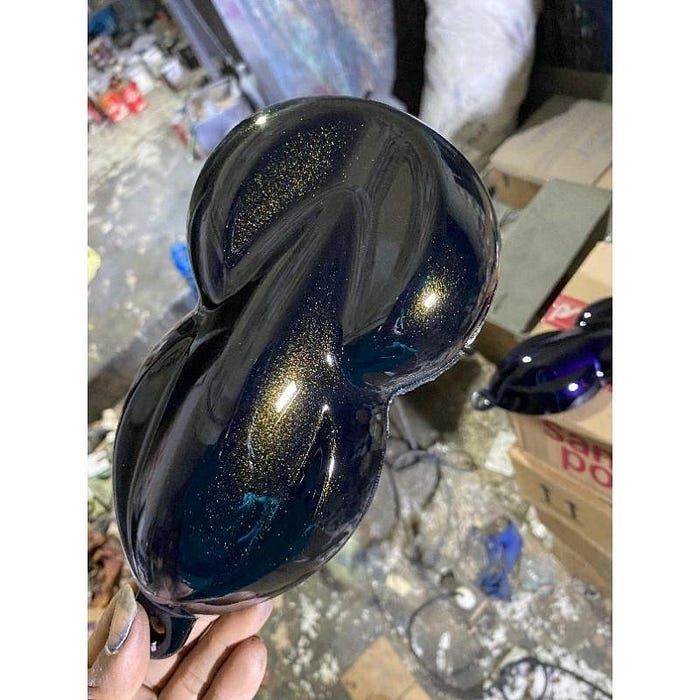
Cat Moonblack gold PU

  Cat Moonblack gold PU  adalah salah satu series yang mengandung partikel kecil seperti crystal yang dan memiliki effect lebih gelap sehing...